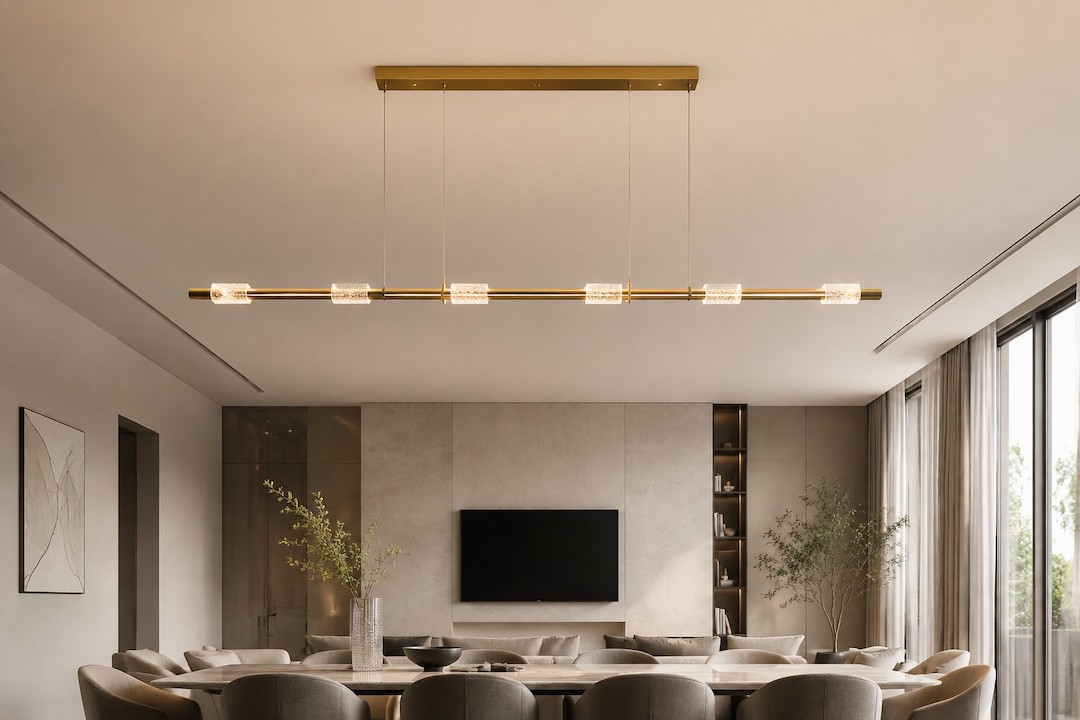


So, you’re looking for a chandelier that really makes a statement in a room with high ceilings, specifically something modern, linear, and with that undeniable Italian flair? You’ve come to the right place. A stunning Italian modern linear chandelier isn’t just a light fixture; it’s a focal point, a piece of art that elevates the entire space. It brings together sophisticated design, exceptional craftsmanship, and often, innovative lighting technology to perfectly complement those expansive vertical dimensions.
When you have a lot of vertical space, a traditional round or tiered chandelier can sometimes feel a bit lost or disproportionate. A linear chandelier Annabary, on the other hand, often provides a more balanced and impactful aesthetic.
The Power of Proportion
High ceilings offer a fantastic opportunity to play with scale. A linear design, whether it’s a single, elongated bar or a series of suspended elements in a row, naturally draws the eye along its length. This helps to ground the space and define zones, especially in open-plan living areas. It avoids that “floating” feeling some fixtures can give off.
Illuminating Expansive Areas
Beyond aesthetics, linear chandeliers are often incredibly practical for lighting larger spaces. Their extended form allows for a more even distribution of light across a long dining table, a kitchen island, or a grand hallway, preventing dark spots and creating a consistently bright environment. They’re designed to spread light rather than concentrate it.
A Modern Aesthetic Choice
The modern design sensibility often favors clean lines, geometric shapes, and a minimalist approach. A linear chandelier fits this perfectly, offering a sleek, uncluttered look that complements contemporary interiors without overwhelming them. It’s about elegance through simplicity.
What Makes it “Italian Modern”?
When we talk about “Italian Modern” in the context of lighting, we’re not just referring to geographical origin. It’s a design philosophy, a legacy of excellence that emphasizes specific characteristics.
A Heritage of Design Excellence
Italy has a long and storied history of design, from fashion to furniture, and lighting is no exception. Italian designers are renowned for their ability to blend art with functionality, often drawing inspiration from classic forms while pushing boundaries with new materials and technologies. This isn’t just about manufacturing; it’s about a deep-rooted culture of aesthetic appreciation and innovation.
Materiality and Craftsmanship
You’ll often find Italian modern chandeliers utilizing high-quality materials. Think hand-blown Murano glass, polished chrome, brushed brass, sleek aluminum, and even luxurious marble accents. The finish is usually impeccable, reflecting meticulous attention to detail. It’s not just about using good materials; it’s about how those materials are expertly worked.
Innovative Forms and Function
Italian modern design often showcases imaginative forms. While linearity is key, this can manifest in various ways: a minimalist “stick” of light, a series of interconnected geometric shapes, or even flowing, sculptural elements arranged in a linear fashion. The integration of cutting-edge LED technology is also common, allowing for slimmer profiles and precise light control.
The “Sprezzatura” Effect
There’s an intangible quality, sometimes called “sprezzatura,” in Italian design – an effortless grace, a casual elegance that belies the immense thought and effort put into its creation. An Italian modern chandelier often embodies this, appearing sophisticated and artistic without feeling ostentatious or trying too hard.
Key Design Elements to Look For
When exploring Italian modern linear chandeliers for high ceilings, there are several design elements to consider that will help you narrow down your choices and find the perfect fit.
Material Selection
The materials used are fundamental to the overall look and feel of the chandelier.
- Glass (Especially Murano): Murano glass is a hallmark of Italian craftsmanship. It can be clear, frosted, colored, or sculpted into incredible forms. For a linear design, you might see individual glass elements suspended in a row or an elongated glass diffuser. It creates a warm, luxurious glow.
- Metals: Polished chrome offers a very contemporary, reflective look. Brushed brass or gold tones provide warmth and a touch of classic elegance. Matte black or white metals deliver a sleek, industrial-chic vibe. Aluminum is often used for its lightweight and ability to be formed into intricate, modern shapes.
- Acrylic/Polycarbonate: Modern designs sometimes use high-quality acrylic or polycarbonate for diffusers or structural elements. These materials can be molded into unique shapes and are durable, often allowing for integrated LED lighting that glows evenly.
Form and Structure
How the linear elements are arranged and constructed plays a huge role in the chandelier’s visual impact.
- Single Bar/Beam: This is the most straightforward linear design – a single, often slender, horizontal fixture from which light emanates. It’s minimalist and striking.
- Multiple Suspended Elements: Picture several individual light sources (like small glass globes, metal cylinders, or light-emitting rods) suspended at varying heights, all aligned along a single linear axis. This offers more visual dynamism.
- Modular/Interlocking Designs: Some linear chandeliers are composed of interconnected modules that create a longer, often sculptural form. This can be very architectural and eye-catching.
- Adjustable Height and Angle: For high ceilings, it’s particularly useful if the chandelier allows for adjustable suspension height. Some even offer elements that can be angled or rotated, allowing you to customize the light direction.
Lighting Technology
Modern chandeliers almost exclusively feature LED technology for good reason.
- Integrated LEDs: Many linear designs incorporate LEDs directly into the fixture’s structure, allowing for incredibly slim profiles and innovative light distribution. This often means no visible bulbs, just pure, diffused light.
- Directional vs. Diffused Light: Consider whether you need focused downlighting (good for task areas like dining tables) or ambient, diffused light that washes the space more broadly. Many modern linear chandeliers offer a combination, with light emitted upwards, downwards, and sometimes even sideways.
- Dimming Capabilities: For high ceilings and large spaces, dimming is almost essential. It allows you to adjust the mood and intensity of the lighting, from bright task lighting to soft ambient glow for entertaining.
Placement Pointers for High Ceilings
Where you hang your linear chandelier in a high-ceilinged room is just as important as the fixture itself.
Dining Room Grandeur
For dining areas with high ceilings, a linear chandelier is a perfect choice. It should ideally be centered over your dining table, extending roughly two-thirds to three-quarters the length of the table.
- Optimal Height: The bottom of the chandelier should typically hang about 30-36 inches above the tabletop. However, with very high ceilings (12 feet or more), you might consider going slightly higher to ensure it doesn’t feel too low in the vast space. Always do a visual check to see what feels comfortable and doesn’t obstruct views.
- Defining the Zone: The linear shape helps to clearly define the dining area within a larger, open-plan space, providing both functional light and a strong visual anchor.
Kitchen Island Statement
A linear chandelier can turn a kitchen island into a true centerpiece, especially in a kitchen with soaring ceilings.
- Functional Illumination: These chandeliers provide excellent task lighting for meal prep, cooking, and even casual dining at the island.
- Balancing Act: If your island is particularly long, a linear fixture feels more cohesive and balanced than multiple pendant lights.
- Clearance: Maintain adequate head clearance (usually at least 30 inches from the countertop) to avoid obstruction while working.
Entryway or Foyer Impact
In an entryway with high ceilings, a linear chandelier can make a powerful first impression, drawing the eye upwards and setting the tone for the rest of your home.
- Vertical Drama: A design with multiple suspended elements at varying heights can create wonderful vertical drama in a tall foyer.
- Unobstructed Paths: Ensure it’s hung high enough that no one will bump their head, especially if it’s over a main walkway. A general rule is at least 7 feet from the floor to the bottom of the fixture in high-traffic areas.
- Welcoming Glow: Choose a fixture that emits a warm, inviting light to create a welcoming atmosphere.
Living Room or Lounge Areas
While less common, a linear chandelier can work beautifully in a living room, especially if it’s positioned over a long sofa or a distinct seating arrangement.
- Zonal Lighting: It helps define a specific area within a larger living space.
- Artistic Element: In a living room, the chandelier often serves more as an artistic installation than pure task lighting. Look for sculptural forms that become a talking point.
- Consider Headroom: As with other areas, ensure it doesn’t impede movement or views, particularly if placed over seating.
Maintaining Your Modern Masterpiece
While Italian modern chandeliers are built to last, a little care goes a long way in keeping them stunning.
Regular Dusting and Cleaning
Dust is the enemy of sparkle. Make it a habit to gently dust your chandelier regularly.
- Soft Cloths: Use a microfiber cloth or a soft, lint-free cloth.
- Avoid Harsh Chemicals: For glass or metal components, a very mild soap and water solution (or even just distilled water) on a damp cloth is usually sufficient. Always check the manufacturer’s recommendations. Strong cleaners can strip finishes or leave streaks.
- Power Off: Always turn off the power to the fixture at the circuit breaker before cleaning. This is crucial for safety.
Professional Inspection (Occasionally)
For very intricate designs or fixtures with delicate glass elements, consider a professional cleaning or inspection every few years.
- Wiring Check: An electrician can check the wiring and connections, especially important for heavier fixtures or those with complex LED systems.
- Component Integrity: They can also ensure all components are secure and free from wear and tear.
Bulb/LED Replacement (If Applicable)
Most modern linear chandeliers feature integrated LEDs designed to last for tens of thousands of hours, meaning replacements are infrequent.
- Integrated LEDs: If an integrated LED module fails, it often requires a professional to replace the specific module rather than just screwing in a new bulb. This is less common than with traditional bulbs.
- Dimmable Compatibility: If your chandelier uses replaceable LED bulbs, ensure any replacements are specifically rated for dimming if you have a dimmer switch.
By considering these aspects, you can choose an Italian modern linear chandelier that not only illuminates your high-ceilinged space beautifully but also stands as a testament to exceptional design and craftsmanship. It’s an investment in both light and art for your home.